Who has time to read? You can just download the calculator here.
 If you want to know how it came about, the story goes like this: About four years into my engineering career at NASA's Jet Propulsion Laboratory, I got the chance to attend a series of lectures put on by Aerovironment at Caltech. Aerovironment was an early green company, maybe the first with a lineup of such heavy hitters. The lectures were entitled the "Sunraycer Lectures". They detailed how Aerovironment had won the Australian Solar Race in a car called "Sunraycer".
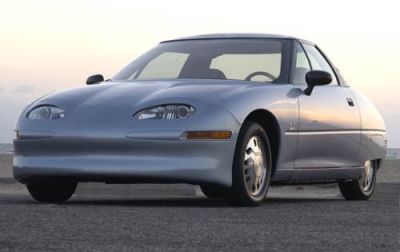
  Official sources say GM put almost two million dollars into the Sunraycer. The figure I heard was higher than that. The Sunraycer was a forerunner of the Impact. The ill-titled Impact was later renamed EV-1 and featured prominently in a movie called, "Who Killed The Electric Car".
  A system-by-system account of the Sunraycer was given by each of the principals: Peter Lissaman's shape, Al Cocconi's on drive train, Ray Morgan's body layout, Bart Hibbs material choices, etc. Several figures of note gave presentations on their subsystems. There was a systems engineer and a structures guy who did the "landing gear".
For a final, attendees got to do a design, I did a solar-to-steam car design intended to work around the low efficiency of solar cells and built a scale-model, but I'm getting ahead of myself.
Peter, as in Dr. Lissaman - had a famous gliding airfoil named after him. He opened with a lecture about GMR method, which stood for Goal-Method-Result. I never met Sir Edmund Hillary, the first conquerer of Everest, but Peter looked and sounded like Sir Edmund to my imagination with his bold declarations and British accent. Lissaman had decided to fair the flow at the rear of the Sunraycer with "chines", discrete panels that would allow the solar cells to be attached without bending them excessively. Later designs would smooth the tail completely, but the shape was interesting and met the fabrication needs of the time. It also made for a car with an extremely low drag coefficient, 0.125, the lowest ever achieved at that time.
 Al Cocconi was an electronic genius, cut from the cloth of Apple's Steve Wozniack, but by rumor, a bit more temperamental. He had figured out that high voltage AC made for a more efficient use of a battery's limited energy compared to the low voltage DC that characterized golf-cart techology of the time. He used power MOSFET's, control circuitry and a host of cool tricks to produce a drive train that was extremely energy efficient. He later invented the first hybrid, part of which was in a trailer towed behind his car, and worked on aircraft that can stay aloft for days, but those are tales for another day.
 Ray Morgan was a down-to-earth engineer who talked about how Kevlar was better than Boron composites if you're in the ER after an experimental aircraft crash, because they "don't have to pick the boron splinters out of you one at a time". Ray could build stuff, in that enigmatic Mythbuster's sort of way. He talked about "Hot Shot" glue, a methacrylate glue that allowed you to put things together fast in a prototype and how you could pound the ends of fine tubing with a hammer so you could drill and fasten them together with a bolt. He is shown here shaking hands with Burt Rutan. Morgan is on the right.
 Bart Hibbs, son of Al Hibbs (the voice of the Voyager spacecraft), talked about Spectra vs. Kevlar. Spectra is stronger and lighter but had the disadvantage of "creep". This meant that a Spectra panel or component placed under sustained load would actually change shape over time and usually in a way you wouldn't want. The load dynamics of Spectra, from the slow responding viscoelastic ones, to the high speed stiff response encountered in parachute openings made it a questionable material in some sense. A generation of skydivers would discover this the hard way. Bart was smart like his dad and didn't miss details.
 Paul had a habit of only hiring CalTech Ph.D's for quality-control reasons, just as Honda liked Art Center College of Design people. Great if you went there, sad if you didn't. During the lectures Paul MacReady himself would chime in with the wonderful observations and questions. He reminded me of Richard Feynmann, and had most certainly attended lectures by Feynmann during his time at CalTech where he received a Ph.D. in aerospace engineering, or somethign akin to that. Paul had already distinguished himself on numerous occasions, the most notable of which was his winning the Kremer prize for the FIRST human-powered flight. Paul had worked on the wing of the DC-9 and asked himself, "What happens if you cover it with clear plastic sheeting instead of aluminum?" Paul had a knack with doing calculations that simplified things and figured out that a person on a bicycle produced sufficient power to keep such a wing aloft. The early prototype was secreted in a hanger with a landing gear of toy firetruck wheels. The final version hung in the Smithsonian.
 One thing I remember was Paul, or by title, Dr. MacReady was defining specific energy in an easy-to-apprehend way. A battery had enough energy to lift itself so many feet. Different battery types could then be ranked by how far they could lift themselves and indeed any energy storage or conversion scheme. The Sunraycer used batteries you could make in your kitchen with silver foil and potassium hydroxide. A similar battery was used on the moon vehicles. Light and powerful, the name of the game in electric cars.
Now all this took place in the context of yours truly bicycling back and forth to work, and I got really tired of breathing LA exhaust fumes, which drifted north to Pasadena and clung in an opaque and stupefying fog that hid the mountains that would light on fire from time to time.
After finishing the course, it all seemed kind of straightforward, except for the two-million dollar part. It came about that a certain fellow and I cooked up a scheme by which we might retrofit existing cars by removing their internal combusion engines and replacing them with a drop-in "electric-car conversion." We picked the Geo Storm as a starting point because it was trendy and quasi-aerodynamic. The sales guy was more than happy to hear this.
 I immediately began mechanical design of the "module" and collecting the components for a prototype, sinking about $30,000 into credit card debt in the process. The fellow that I had originated the concept with parted ways with me, and I was left holding the bag and running out of funds, never finished the prototype. Coincidentally, there was almost no demand for electric cars. Later simulations would show that our "modular motors" concept was somewhat ill-fated from the start. If I had done these simulations at the beginning of the project, this would have been understood with considerably less pain. The mantra that emerged from the simulations was, "Electric? Half the Car at Twice the Price", due primarily to the range limitations of the lead-acid and nickel-cadmium battery technologies of the time.
So I decided to take the basic parameters of an electric electric car, including hybrid APU's and solar panels if desired and codify them as a set of calculations. The sophistication comes from the number of related issues, "pushing on this pulls on that".Those calculations can save you a great deal of pain, dollars on the cutting-room floor, and get you closer to realizing the ideal of a practical electric or hybrid electric car. I ask a few dollars for the software, but according to my experience, its a pittance compared to $30,000...
Van / wdv.com