Read Latex

Saturday, September 05, 2009

Radio Light -


I’ve got hamtrak, my communications monitoring program, running more reliably. It listens on my soft radio and plots pins in Google Earth as amateur radio contacts occur. I wanted to know if there was bias in the reception I was getting due to geographic, antenna or electronic factors. I let it run for 11 hours. Then I compared the picture it produced with US population as seen from space:


For this small sample, the visual correlation appears representative.

Friday, September 04, 2009

A Solution to the North Rising Sun


Lately as I ride across the pedestrian bridge at sunrise, I have noticed the sun has been rising in the north. Having been informed that the always rises in the east, I found this perplexing. The trouble turns out to be the accumulation of two interesting factors.


1) The pedestrian bridge does not head due north, it is rotated 15 degrees towards the east. Picture:

So believing the bridge to be north-south was problem one.


2) The sun does not rise in the east. Tomorrow (9/4/2009) it rises exactly 9 degrees north of east. But back in July when I was first having the problem, it was rising 28 degrees north of east. As late as August 4, it was 21.4 degrees north of east. Moreover just before sunup, the sun is another couple of degrees north of east, when its light is beginning to fan out across the sky.


3) Accounting for the early light makes 30 degrees north + 15 degrees of bridge rotation, so the sun APPEARS to be rising at 45 degrees north of due east and that surely looked wrong. I noted this out fearing some sort of cosmological malfunction of my brain or dire state of misinformedness.


4) The sun does not rise in the east, it rises in the north east, in the summer and the south east in the winter. This is paradoxical since the winter sun rides lower in the southern sky as the northern hemisphere tilts further away from it. It rises in the east only one day of the year. This year that will be September 23 at 7 am CDT, a day after the equinox. After this the sun heads south of east for its rising reaching a of maximum southness of east of 28.6 degrees around the solstice, December 21.


5) Riding on the bridge, the sun will appear to rise in the east on Halloween morning at 7:15 am in a suitable tribute to my distress. The next day we reset our clocks introducing a new kind of biological confusion.


Monday, August 31, 2009

A Short Trek to DNA Cutter M87


Tonight I was watching the city of my old workplace, JPL, burn.


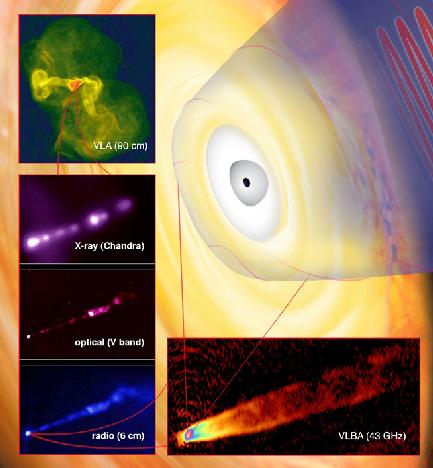
While doing so I ran across UCLA data on Messier object M87, a galaxy that contains a supermassive black hole.


I opened a certain Google Earth database built from the Ukrainian observations and found out that, indeed, this RF source is one of the brightest in the universe.

But for the first time I had a possible name for bright source GR1228... could it be M87?!


M87 is very interesting because it contains a spinning black hole that is the mass of six billion of our suns, diversely radiant in frequency and direction. It has been observed at frequencies from as low 16.7 MHz, through microwave and optical frequencies, up to gamma ray frequencies. Extremely wide band radiation. Thus, it is reasonable to assume that it is a strong cosmic ray emitter as well. As such it represents a "DNA cutter". M87 gamma rays cause the emission of ultraviolet light when the upper atmosphere of Earth is impacted.

I needed to make sure that G1228 was M87, so I did some calculations and found a discrepancy between the M87's position in Google Sky and its position in the Ukrainian radio telescope database:


Now M87 has neighbors and GR1228 has neighbors, but none are so bright in the radio spectrum.


For the time being I will assume that some kind of atmospheric refraction is at work and for pointing purposes M87 is a good starting point for listening to GR1228.

I was most curious to know the current position of M87 relative to our daily experience, so I fired up Hallo Northern Sky, a free astronomy program that does time lapse on all known planets, stars, constellations and Messier objects. Running planet and star paths, past, present and future is just amazing.


Now M87 is on a line between Arcturus and Denebola. The “Star of Joy” Arcturus is the fourth brightest star in the sky and Denebola is only 36 light-years from earth.


Today for thirteen hours M87 is exposing us to its DNA splitting radiation, starting at 9:23 AM CDT this morning and ended at 10:37 PM on a route slightly more overhead than the sun.


M87 makes a good calibration standard for celestial radio location activities.
I would like to know how fast M87 it is spinning, its strength as a cosmic ray source, what kind of antennae one might use to track it, and if it is truly the same object as GR1228.

Tuesday, August 18, 2009

A Fence In Space...


For the past couple of days I have been listening to satellite crossings from the Kickapoo Space Radar. NAVSPASUR is part of the North American “Fence” that operates along the a great circle fan crossing the US. The "post" in Kickapoo is at latitude 33.558, the second tack to the left of my home in Little Rock (the red tack). One can listen to objects crossing the radio fence using Stan Nelson’s station in Roswell, New Mexico. The broadcast is in real time.

For a real treat, the NASA Java Applet JTRACK-3D allows one to view which of 900+ satellites are in crossing the fence at any given time.


When a space borne object crosses the fence it chirps. With practice one can distinguish satellites from meteors. An audio chirp and no satellite, means a meteor or a satellite crossed that isn’t in the public database. I heard two while writing this sentence. Notice that the four platforms above all have orbital periods of around 100 minutes.

Platforms which cut obliquely like ORBCOMM FM 36 have a different audio signature than those with highly inclined polar orbits due to their longer dwell time in the RF swath. To some degree the chirps are unique and I wonder if a blind person could actually get to where they knew the satellite by its chirp. Locals will be happy to know that there is a “post” in the space fence at Red River Space Surveillance Station, AR, near Texarkana.


To Catch A Falling Star...

Using the light on one can see...

When any object reenters the earth’s atmosphere it gets hot. Orbital velocities are on the order of 17,000 feet per second, and much higher, and the angle of reentry determines the fate of the object. If it enters steeply, it gets hot more quickly, and the forces are much higher, on the order of hundreds of gees. These forces can break an object into smaller pieces which then proceed along their own paths. Peak heating (and deceleration) occur between 200,000 feet and 400,000 feet, the boundary of space. Objects in this region are supersonic, and become subsonic around 100,000 feet (give or take).


If an object enters at a shallow angle, it can skip off the atmosphere, much as a rock skips along a lake. It will often go back into orbit and reentry again, but at a slightly steeper angle until it encounters the fate of the first group. If it is going escape velocity, it can skip and then just go back out into another orbit, but this is not the most likely scenario.


When an object enters at an angle of between 2 and 8 degrees (give or take) it undergoes a smooth and controlled reentry, pulling only a few gees. All objects that encounter the atmosphere create a boundary layer of ionized gas. This does several things. First, it attempts to melt the skin of the object. Second it reflects RF internally. Third, and most importantly for us, the layer of ionized gas creates a streak in the sky that is an effective RF reflector. Because of the conical shape of this streak of ionized gas, the reflector does not reflect the same in all directions, the fancy word for this is anisotropic. It polarizes the RF, favoring some orientations and frequencies over others, just as your Polaroid sunglasses do.


Because this reflector is not the same size in all directions, it will favor some frequencies along its long axis and other frequencies along is short axis. One could (and may hams have) broadcast against this reflector and used it as a relay until the cloud of ionized gas cools and dissipates. But broadcasting against this reflector is not necessary, as the sky is full of signals that are already bouncing off of it, like VOR stations for example. When those signals are located using SDR, GPSDO and multilateration, they can be combined to create an image of the shape of the reflector.


This image of the shape of the reflector provides the trajectory of the reentering object. The size and frequency response of the reflector provides information about the size, position and velocity of the object. Combining this information can be used to determine where the object landed, by solving a differential equation called the initial value problem or IVP. IVP says find where the object is now, based on where you saw it last, and how it was moving.


This is how you catch a falling star.


Thursday, July 02, 2009

EVCalc2: A Calculator for Electric Vehicles


Who has time to read? You can just download the calculator here.

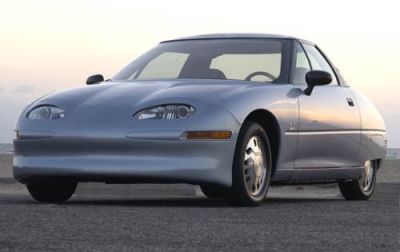
If you want to know how it came about, the story goes like this: About four years into my engineering career at NASA's Jet Propulsion Laboratory, I got the chance to attend a series of lectures put on by Aerovironment at Caltech. Aerovironment was an early green company, maybe the first with a lineup of such heavy hitters. The lectures were entitled the "Sunraycer Lectures". They detailed how Aerovironment had won the Australian Solar Race in a car called "Sunraycer". Official sources say GM put almost two million dollars into the Sunraycer. The figure I heard was higher than that. The Sunraycer was a forerunner of the Impact. The ill-titled Impact was later renamed EV-1 and featured prominently in a movie called, "Who Killed The Electric Car". A system-by-system account of the Sunraycer was given by each of the principals: Peter Lissaman's shape, Al Cocconi's on drive train, Ray Morgan's body layout, Bart Hibbs material choices, etc. Several figures of note gave presentations on their subsystems. There was a systems engineer and a structures guy who did the "landing gear".

For a final, attendees got to do a design, I did a solar-to-steam car design intended to work around the low efficiency of solar cells and built a scale-model, but I'm getting ahead of myself.

Peter
, as in Dr. Lissaman - had a famous gliding airfoil named after him. He opened with a lecture about GMR method, which stood for Goal-Method-Result. I never met Sir Edmund Hillary, the first conquerer of Everest, but Peter looked and sounded like Sir Edmund to my imagination with his bold declarations and British accent. Lissaman had decided to fair the flow at the rear of the Sunraycer with "chines", discrete panels that would allow the solar cells to be attached without bending them excessively. Later designs would smooth the tail completely, but the shape was interesting and met the fabrication needs of the time. It also made for a car with an extremely low drag coefficient, 0.125, the lowest ever achieved at that time.
Al Cocconi was an electronic genius, cut from the cloth of Apple's Steve Wozniack, but by rumor, a bit more temperamental. He had figured out that high voltage AC made for a more efficient use of a battery's limited energy compared to the low voltage DC that characterized golf-cart techology of the time. He used power MOSFET's, control circuitry and a host of cool tricks to produce a drive train that was extremely energy efficient. He later invented the first hybrid, part of which was in a trailer towed behind his car, and worked on aircraft that can stay aloft for days, but those are tales for another day.
Ray Morgan was a down-to-earth engineer who talked about how Kevlar was better than Boron composites if you're in the ER after an experimental aircraft crash, because they "don't have to pick the boron splinters out of you one at a time". Ray could build stuff, in that enigmatic Mythbuster's sort of way. He talked about "Hot Shot" glue, a methacrylate glue that allowed you to put things together fast in a prototype and how you could pound the ends of fine tubing with a hammer so you could drill and fasten them together with a bolt. He is shown here shaking hands with Burt Rutan. Morgan is on the right.
Bart Hibbs, son of Al Hibbs (the voice of the Voyager spacecraft), talked about Spectra vs. Kevlar. Spectra is stronger and lighter but had the disadvantage of "creep". This meant that a Spectra panel or component placed under sustained load would actually change shape over time and usually in a way you wouldn't want. The load dynamics of Spectra, from the slow responding viscoelastic ones, to the high speed stiff response encountered in parachute openings made it a questionable material in some sense. A generation of skydivers would discover this the hard way. Bart was smart like his dad and didn't miss details.

Paul had a habit of only hiring CalTech Ph.D's for quality-control reasons, just as Honda liked Art Center College of Design people. Great if you went there, sad if you didn't. During the lectures Paul MacReady himself would chime in with the wonderful observations and questions. He reminded me of Richard Feynmann, and had most certainly attended lectures by Feynmann during his time at CalTech where he received a Ph.D. in aerospace engineering, or somethign akin to that. Paul had already distinguished himself on numerous occasions, the most notable of which was his winning the Kremer prize for the FIRST human-powered flight. Paul had worked on the wing of the DC-9 and asked himself, "What happens if you cover it with clear plastic sheeting instead of aluminum?" Paul had a knack with doing calculations that simplified things and figured out that a person on a bicycle produced sufficient power to keep such a wing aloft. The early prototype was secreted in a hanger with a landing gear of toy firetruck wheels. The final version hung in the Smithsonian.


One thing I remember was Paul, or by title, Dr. MacReady was defining specific energy in an easy-to-apprehend way. A battery had enough energy to lift itself so many feet. Different battery types could then be ranked by how far they could lift themselves and indeed any energy storage or conversion scheme. The Sunraycer used batteries you could make in your kitchen with silver foil and potassium hydroxide. A similar battery was used on the moon vehicles. Light and powerful, the name of the game in electric cars.

Now all this took place in the context of yours truly bicycling back and forth to work, and I got really tired of breathing LA exhaust fumes, which drifted north to Pasadena and clung in an opaque and stupefying fog that hid the mountains that would light on fire from time to time.

After finishing the course, it all seemed kind of straightforward, except for the two-million dollar part. It came about that a certain fellow and I cooked up a scheme by which we might retrofit existing cars by removing their internal combusion engines and replacing them with a drop-in "electric-car conversion." We picked the Geo Storm as a starting point because it was trendy and quasi-aerodynamic. The sales guy was more than happy to hear this.
I immediately began mechanical design of the "module" and collecting the components for a prototype, sinking about $30,000 into credit card debt in the process. The fellow that I had originated the concept with parted ways with me, and I was left holding the bag and running out of funds, never finished the prototype. Coincidentally, there was almost no demand for electric cars. Later simulations would show that our "modular motors" concept was somewhat ill-fated from the start. If I had done these simulations at the beginning of the project, this would have been understood with considerably less pain. The mantra that emerged from the simulations was, "Electric? Half the Car at Twice the Price", due primarily to the range limitations of the lead-acid and nickel-cadmium battery technologies of the time.

So I decided to take the basic parameters of an electric electric car, including hybrid APU's and solar panels if desired and codify them as a set of calculations. The sophistication comes from the number of related issues, "pushing on this pulls on that".Those calculations can save you a great deal of pain, dollars on the cutting-room floor, and get you closer to realizing the ideal of a practical electric or hybrid electric car. I ask a few dollars for the software, but according to my experience, its a pittance compared to $30,000...

Van / wdv.com

Tuesday, June 30, 2009

Filamentary Rotations

I don't know where to begin, so let me just get a few ideas on the table, to see if a whole will emerge.

A degree of freedom is something like movement in the x-direction. Move over, move back. This degree of freedom is big, because we can see the movement if it is large enough.

So we might call this idea of a freedom of movement in the x-direction a dimension.

A line of this movement, or a filamentary curve is something we can slide a bead along. We assume that we can label subsequent positions of the bead as we move over and move back, and if these labels are consecutive numbers, we can use them to say where we were, where we are, and where we will be.

This filament of possible movement is so large we will call it a large dimension - a large degree of freedom.

But now take the bead and twirl it. The bead can also have another degree of freedom, a rotation.

But assume for a moment that we allow the bead to shrink, ever smaller and smaller, till it is just the size of the filamentary curve itself. We can talk about the rotational station of this bead, but the degree of freedom itself is curled up, too small to see, so we might call this a small dimension - a small degree of freedom.

We can also think about labeling how curled up the bead is by naming the turns or parts of a turn the bead has made. If these names are consecutive numbers we can use them to say where we were, where we are, and where we will be.

Now we are ready to talk about the first idea.

If we have something that is moving in a large dimension along a curve or line, we can resolve this movement as movements along a set of complementary axes. Then we can say that movement along our arbitrary filamentary curve has this much movement in the x-direction, this much movement in the y-direction, and we can use these pairs of labels as perfectly adequate alternative names for the position of the bead along the arbitrary filament.

If you have ever spun a bicycle wheel and held onto the axle in each hand, you will know that the wheel doesn't like to be tilted. It resists this tilting with an inertial force called the gyroscopic force. The gyroscopic force wants to keep the wheel spinning in its original direction and complains by resisting if the wheel is tilted to spin in some other plane of rotation.

All the points on the wheel except the very center, can be represented as translations through space, they aren't rotating at all! But the very center of the wheel (we pretend the axle is rotating too) has an axle, an axis of rotation, and there is an infinitesimally-wide dimension where the movement is pure rotation with no translation. This is a small dimension, because it can never be seen. A more apt name for it might be an invisible dimension.

If the bicycle wheel became like the bead, and became infinitely small, it would have no gyroscopic force. So it could be spinning in one direction, and then that whole assembly could be spun in a second direction and we could resolve spins in one direction into components of spins in multiple other directions as we did with translation above.

Now for the second idea.

If we count up the directions that we live in there are three, and for each of these directions there are three rotational degrees of freedom. Then there is the passage of time. So we really live in a six dimensional sort of space, if we count the invisible dimensions of filamentary rotation, seven if we consider time to be a dimension, but it doesn't have the same freedom as the others. We are stuck in it.

The third idea.

I should stop here, but I am afraid I might lose an important idea, so I will just add something that I find interesting. We rarely talk about the position of a photon. We can talk about where it originated, or where it might be after a time, but the native state of a photon is not really its position, but rather its velocity, which in a vacuum is just c - the speed of light.

But this is a translational velocity and I want to know if there is also some kind of native rotational velocity of a particle, say a photon, or even some other kind of a fundamental building block, perhaps an electron. The spin of an electron is one of its four pieces of state information. My question is, how fast is it spinning?

So putting the last two ideas together we see that it isn't just where something is that is its native state, but rather how fast it is going that characterizes something important about it. How fast something goes is a degree of freedom - a dimension also.

If we add up where things are, and how fast they are going in translation and rotation we come up with 12 degrees of freedom, or 12 dimensions. That plus time makes 13, which just happens to be my lucky number...

Monday, June 29, 2009

An Excerpt from Ham Radio Field Day 2009

Because of an exhausting 50 mile bike ride in the hot sun, I couldn't make it to Field Day on Saturday. I woke up late on Sunday, hoping to make some kind of belated appearance.

Just for fun, I started my HamTrack system at 9:47 am - a mashup of Google Earth, CW Skimmer, and C++ programs, glued together with some Unix tools, sed, grep, awk, along with the usual database fiddling and geolocating.

It is an end-to-end automated signal tracking system that translates RF morse code into pins on a map. So I left it running and headed over to the real Field Day, where, after catching up with my buds, I managed an impressive 2 contacts 15 minutes before the end of the event at 1 PM.

When I got home I discovered that 308 stations made 917 calls while I was gone, illustrated as pins in a map below. As in the 24 hour case, (previous blog), pins are colored by frequency, red for 6.9 MHz, blue for 7.1 MHz and spectral coloring in-between. My pin AE5CC is arbitrarily assigned red so I can find it in the sea of pins.

You will need the Google Earth browser plug-in to view the interactive map, and it takes a few seconds to load the data - about the time it takes to read this. If you don't use Google Earth, you're missing the best thing since sliced bread. - AE5CC


Monday, June 15, 2009

An Extreme Soft Radio Adventure - 24 Hrs @ 7 Mhz


After some antenna simulations using 4Nec2 (by Arie Voors) I wrapped a wire around my townhouse to create a loop HF antenna. I was curious if it was working and how the actual propagation pattern compared to my predictions. So I left my software defined radio, a Softrock 6.2 (by Tony Parks and Bill Tracey), running for 24 hours. It turned out to be quite an adventure!
Results: 1138 stations made 4907 calls, illustrated as pins in a map below. The pins are colored by frequency, red for 6.9 MHz, blue for 7.1 MHz and spectral coloring in-between.

Mouse over the map to see calls from the Island of Midway to Puerto Rico in longitude, from Alaska to Florida in latitude.

You will need the Google Earth browser plug-in to view the map, and it takes a few seconds to load the data - about the time it takes to read this. If you don't use Google Earth, there is an image at the bottom of the page. - AE5CC


Sunday, February 08, 2009

Printing Circuits


While talking about building circuits, my very talented friend said to me:

“For me, soldering is a way to turn money into smoke.”

If you think about it, soldering is a very primitive activity. It is a cauldron of molten metal from the Middle Ages whose sole alchemy is making a single connection. A connection known for toxicity and burns. Toxicity, because until recently solder was full of toxic lead, and some are talking about returning to lead because of the whiskers that form with lead-free solder (ROHS compliance). Burns? Burns on both hands from soldering accidents over the years. None of which confer the ability to keep from getting burned again. Solder for regular people melts at 360 degrees F. The iron is over 500 degrees F. A soldering iron left unattended can burn down the house.

Most metals conduct with low resistance. You can, if you try hard enough, get other things to conduct, like certain plastics, but they are never as good.

We are children of the integrated circuit, invented by Jack Kilby at Texas Instruments in 1958. From then on printed circuits took off. Now you can get almost any circuit you can think of for FREE in something called a sample program. You ask the vendor and they send sample chips for free. Then you make something, and if it is a hit, they make back their money because you buy the reel of 15,000.

So we regular people could stand on the shoulders of giants but for one obstruction and that obstruction is soldering.

Soldering makes a metal-to-metal connection, nothing more than a bit of
metal-to-metal logic. Now is the time to retire that connection to the Middle Ages.

That would have happened but for one little bug, one little fly in the ointment and that fly is capacitance.

Most of the time, capacitance is your friend. Want to smooth out the bumps in the road from power or switching? Install a capacitor. But when you want things to happen fast, capacitance puts on the brakes.

This bad kind of capacitance is aptly called parasitic. The solution is to use short or if possible, non-existent, wires.

One might say, "Why not cancel that capacitance with a little inductance? After all they ARE opposites aren’t they?" Well adding inductance to capacitance only throws gas on the fire when it comes to slowing things down because of one itty-bitty formula. Like its friend, E = mc2, that formula is absolutely magical. It is (drum roll please):


Where
L is inductance and C is capacitance. If you want to go fast, you have to make L and C small. The smaller you are, the faster you go until you aren’t there. Like Dylan said, "I'm glad I'm not who I am!" You’re traveling the speed of light, trading inductance for capacitance, in waves that shoot through space.

So what do I want already?

I want to be able to sit at my computer and design a circuit that uses a whiz-bang IC and then I want to click PRINT and have the circuit pattern ready to go. Then I want to GLUE the IC and other parts down to the metallic pattern printed on paper, fire it up and watch it blink or glow or do whatever it needs to.

And I don’t want the whole process of printing and gluing and firing it up to take more than 5 minutes, because that is really about as long as I can stand to wait.

And if I had that, I could make all kinds of things, like radios, and robots and glasses to see Dimension-N, just by printing and gluing and firing them up.

And I don’t want this just for me or my friend, I want it for everybody. I don’t want to build a million dollar lab and make a hundred thousand dollar machine.

I want a hundred dollar machine and two dollar glue.

Then I can live in a world that we can make a better and more interesting place.

Wednesday, July 09, 2008

Sunlight at the End of the Tunnel


Here is the performance of a certain solar cell company as seen from Google finance. Solar is up 1157% over a 34 month period. "Solar has tipped", to quote Malcolm Gladwell. I put this chart at the end before, but nobody reads that far anymore.


Sometimes I like to look at what the market is doing to see what collective wisdom is currently in force. This lets me see if what I’m thinking is what the rest of the world is thinking. I would just hate to be out of step. Here is a graph of fossil energy stocks for the past 34 months. Up about 50% on average. Not quite like solar.


Energy is in blue. US industry is in red. The value of energy is rising faster than the dollar or the value of industry. There are 334 energy companies. Over half, 186, of these companies are worth a billion dollars or more. One company, Exxon is worth half a trillion dollars. I took the time to add up their values. Their combined value is 4.13 trillion dollars. If you gave 4 million people a million dollars each, what might they do? At least be quiet, right?

Now let’s look at what the market says about coal.
Maybe it will say, “"Say No to Coal"”, and we can take our yard signs down.


Nope. The market says coal is increasing in value more rapidly than gold. Here is gold over the same period:


There are 22 coal companies with a combined value of 103 billion dollars. One company, Peabody Energy is worth 21 billion dollars. Guess we better leave the yard signs up. But there is one piece of good news. Solar cells are rising faster than gold or coal or most anything. Over 1000% in the last two years. Don’t you wish you had been in that?


Tuesday, July 08, 2008

PC Security Checklist


As more activities migrate to personal computers, system security becomes a greater concern. Threats to PC security include viruses, Trojans, worms, phishing schemes, buried processes and distracting scams. This note is Wintel-centric but applies to Mac and Linux boxes as well. This note addresses five categories of personal computing security.

A) Physical and Site Security - Routers and Locks

The web connection coming into your house is just another sewer pipe. Treat it accordingly. Use a router, lock it down.

1) Avoid connecting your DSL or cable modem directly to your computer. Instead,isolate your IP address by placing a router between you and the outside world. This also gives you additional ports that you can control access to and from. A router makes it difficult for an outsider to see your IP address (your internet phone number) or your MAC address (your hardware unique identifiers).

2) Install your router where you can see it. Control physical access to it.

3) Change your router name and password to something besides admin, admin.

4) Change your router IP address to something other than 192,168.1.1. Your browser will remember the new address. The router address can be reset by rebooting your router, but not without physical access.

5) The internet is NOT ham radio. Goodwill, Character and Integrity do not apply as in the licensed arts. Use 128-bit WEP or better encryption. Any device that connects to my router (the internet equivalent of a repeater) must have permission.

B) Soft Security - Anti-virus Software

You can do everything right and still get infected.

1) Install good anti-virus software. I currently use McAfee because it comes free with my Scottrade account and I can run three legal copies of it on other computers in the household. I have used Norton, but it costs too much, expires frequently and hogs system resources. I really like the free AVG software. It is excellent and they don't try to elbow out everything else. Computer Associates gives you a free trial and then makes uninstalling a total nightmare. This goes for several other packages. If a vendor doesn't provide a clean uninstaller, don't use them, because THEY are a virus.

2) Use firewall software. Insert exceptions for required sites and services like Echolink.

C) Email Security

Scan inbound and outbound email and attachments using anti-virus software.
1) Don't open attachments from people you don't know.

2) Google gmail allows you to report items as spam. Use it.

3) Report fraud and phishing emails to their respective agencies including the ISP, Paypal, Ebay, FBI and Attorney General. Some ebay frauds have been really authentic looking. Check for spoof URL's before responding.

4) Keep a primary email account, and route all other email accounts to and
from it. This is for convenience as much as security.

D) Browser Security - Plug-ins and Spyware

Try Firefox 3.0 or later. It is multi-platform, open source, and accountable.

1) McAfee red lights troublesome web destinations, including bad ham radio destinations which are rare. I average 490 searches a month so this is quite handy. Other products also do this. Do not let anyone or anything obstruct your access to good information.

2) Don't use products (e.g. Real Video) that monopolize services such as video display and attempt to be the end all. If you give them your name and address you will get on "some list". Some lists go everywhere. Some programs will leave background processes running to report back to the mother ship. Besides invading your privacy these make browsing and computing slow.. AT&T Yahoo DSL is notorious about filling your PC with wasteful market-driven processes. They have destroyed the quality of many a newcomer's experience by marketing them to death. Too many choices.

3) Use Google Safe Search to avoid sites that are a frequent source of viruses. Your computer will get sick. It's karma.

4) Use Microsoft AntiSpyware. Forced by their own losses to develop this product, it works and its free. It is fairly lightweight, process-wise. Enable the auto-download, but require them to ask permission to install. Keep track of what they are adding or subtracting from your computer. Their track record requires them to be supervised.

5) Avoid illegal download sites for music, videos, or software. Your computer will get sick. More karma. Why steal? You will have to make a list like Earl.

E) Kid Security

"Little eyes, watch what you see..."

1) Put kid computers in a public place like the kitchen.

2) Check your kids browser history, chat, IM, Skype, often.

3) Facebook trumps myspace, but not by much. Check online friends and memberships often.

Conclusion

We live in the age of hot and cold running knowledge. Anything that obstructs access to this knowledge is a loss of freedom.

We also live in the wild west of the information age. Forewarned is forearmed.


L. Van Warren - AE5CC

Wednesday, April 09, 2008

Antenna Gain


Gain patterns can be drawn for microphones, radio antennas and light reflecting from surfaces. They are both informative and beautiful.
The following images show the gain of a certain "wideband" herringbone antenna as frequency increases. Gain is simply the sensitivity of the antenna to a signal in a given direction.

When you tune a radio, you are selecting which frequency you want to listen to. But your antenna has to be cooperating by being sensitive to both the frequency of that station, its location, and how the signal bounces off the sky, land, water, trees, mountains and buildings.

So to begin we tune to 1.0 megahertz on our radio dial. In the pictures that follow we will increase the frequency on our radio dial by a factor of ten with each click. That makes for pretty big jumps. I hope to animate the in-between's soon. There are
so many variables one must decide what to show first. In the meantime here is a keyframe warm-up starting at the promised 1 MHz. Captions are below the images.

You Say Tomato
1 MHz - Radially symmetric pattern, more gain at top than bottom.

I Say Potato

10 MHz -More gain at the ends than the middle.


The Edges of Lambda

100 MHz -Nature is more beautiful than I can imagine.


Butterfly Spectacular

1000 MHz -Think about this next time you tune a radio.

The last picture is around the frequency of cellphones and some cordless phones. But their antennas actually have blobby radiation patterns like the first example. Can you think why that might be so?